Skip to content




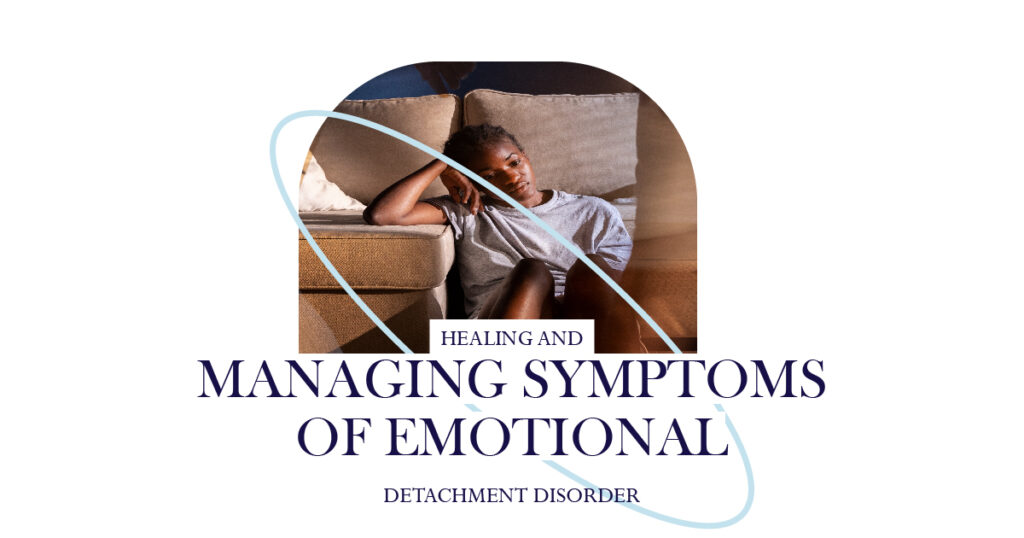
Emotional detachment may silently construct the inner world of a person even before they know that something is not right. Most detachment disorder victims report that they feel out of touch with their feelings, their relationships with other people, and even with their own identity, not that they do not care, but they are somehow broken off internally.
Research on emotional detachment published in Frontiers in Psychology determined that emotional detachment often develops in response to early relational stress and chronic emotional overwhelm, functioning as a protective mechanism. The other clinical review proposes that detachment can be heightened during stressful periods, and individuals may be unable to identify or express their feelings.
The first step to healing is to understand detachment disorder, which is possible with the right support, and then people can be emotionally connected again.
Understanding Detachment Disorder and Its Emotional Impact
Detachment disorder is characterized by a disconnection, numbness, or avoidance of feelings that significantly impact a person’s well-being. It is not just a matter of being reserved, it is a matter of not being able to develop emotional attachment, feelings, or a sense of presence in relationships.
There are many individuals suffering from detachment disorder who have problems with:
- Feeling disconnected from oneself.
- Problem accessing emotions.
- Avoiding closeness or emotional dialogue.
- Going numb during stress.
Why Emotional Detachment Disorder Often Goes Unnoticed
Detachment disorder often lurks in the open due to its symptoms resembling:
- Independence
- Calmness
- Self-reliance
- Being “unbothered”
- Boundary strength
In fact, emotional detachment is a sign that an individual is struggling to feel secure in their own emotions or the emotions of others. People who are unaware of it may think that their lack of connection is a personality trait rather than a psychological pattern that requires treatment.
Common Detachment Disorder Symptoms to Watch For
The symptoms of detachment disorder also depend on the victim, but in most cases, they can be identified by a certain pattern. Such symptoms may disrupt emotional well-being, relationships, and daily life.
The symptoms of common detachment disorder are:
- Numbness or poor emotional range.
- A sense of being alien or lonely from loved ones.
- Problem with feelings or needs articulation.
- Avoiding closeness or emotional vulnerability.
- Trouble trusting others.
- Experiencing (being) closed off in an argument or when under stress.
- Poor sensitivity or inability to read emotions.
- Problem in making a relevant relationship.
- Being a stranger or a spectator in life.
Early Signs of Detachment Disorder in Teens and Adults
It is necessary to pay attention to early detection. During teenage years and early adulthood, the onset of the condition may appear as:
- Withdrawing from family and friends.
- Lessening the expression of emotion.
- Getting too rational or intellectual in order not to feel.
- Problem in connecting in conversation.
- Emotionally shut down and overwhelmed.
- Distracting as a way of escaping emotional pain.
- Constant feeling of emptiness.

These symptoms tend to develop over time, making them more difficult to notice until the emotional distance becomes so great.
Causes of Detachment Disorder: Psychological and Environmental Factors
Detachment disorder does not manifest itself very often without any underlying causes. The cause of emotional detachment tends to be the reaction to:
Childhood Emotional Neglect
Being raised in an emotionally uncaring, invalidating, and unresponsive environment, children are conditioned to dampen their emotions to survive.
Trauma or Chronic Stress
The nervous system may be overwhelmed by an experience of abuse, instability, sudden loss, or constant stress, resulting in emotional shutdown.
Overprotective or Controlling Environments
When children are not given a chance to be independent, they lack the ability to comprehend or even trust their emotional lives.
Attachment injuries
Lack of consistent caregiving, emotional inconsistency, or lack of caregivers results in confusion regarding intimacy and attachment.
Learned coping strategies
Others have been conditioned to dissociate in order to escape confrontation, criticism, or even hurt feelings. With the course of time, the habit becomes automatic.
Certain mental health conditions
Emotional detachment can be a symptom of such conditions as depression, PTSD, or dissociation.
Detachment is not a personality flaw, but rather a coping mechanism for emotional saturation or a lack of emotion.
How Psychological Detachment Issues Affect Relationships and Daily Life
Detachment disorder is not only in the feelings domain, but also in the way an individual relates to the world. The issues might include psychological detachment affecting:
| Relationships | Daily Functioning |
| Problem establishing or sustaining intimacy. | Weakness when experiencing conflict or stress. |
| Fear of vulnerability | Lack of ability to make decisions as a result of being emotionally disengaged. |
| Difficulties in response to the expression of emotion by others. | Feeling disconnected from goals or purpose |
| Couples who feel neglected or disvalued. | Reduced motivation |
| Problem with apologizing or expressing emotions. | Social withdrawal |
Overcoming Detachment Disorder Through Evidence-Based Treatment
It is possible to overcome emotional detachment. The therapy teaches people to reconnect to their feelings and patterns, and to establish normal attachment.
Treatments that are evidence-based involve:
- Trauma-informed therapy is used to work through pre-existing emotional wounds.
- CBT (Cognitive Behavioral Therapy) to dispute emotional avoidance.
- DBT (Dialectical Behavior Therapy) is used in a bid to improve emotional control.
- Connection of the emotional attachment through attachment therapy.
- Somatic therapy is used to reconnect the body and emotions.
Detachment Disorder Therapy Approaches That Support Healing
Therapists tend to integrate techniques so as to come up with a personalized treatment plan. The useful elements can be:
- Determining emotional incitements.
- Emotional labeling and expression.
- Restoring faith in relationships.
- The techniques of grounded learning.
- Confrontation of emotional avoidance.
- Growing acceptance of weakness.
- Empowering emotional intelligence.
The process of therapy does not impose intimacy – it assists people to create emotional security in their own time.
Detachment Disorder Treatment Options for Long-Term Recovery
Consistency, support, and emotional practice are needed in the long-term recovery. Treatment may include:
- Regular therapy sessions
- Connection and understanding support groups.
- Medication, assuming the presence of detachment with depression, anxiety, or trauma.
- Mind-body activities like yoga, breathing, or mindfulness.
- Behavioral modification, which decreases emotional numbing (sleep, routine, and less avoidance)
Building Emotional Connection and Relearning Healthy Attachment
It is a long process of regaining emotional attachment. Helpful steps include:
- Recognizing and identifying feelings.
- Being honest in communication.
- Developing self-compassion
- Staying present using grounding.
- Establishing limits to emotional safety.
- Permitting the trusted relationships to grow over time.
- Confronting the withdrawing instinct.
Healing does not imply being an emotional person. It entails learning to feel safe and true to oneself again.
Start Your Healing Journey — Contact Lonestar Mental Health Today
You do not necessarily have to feel disconnected. Despite emotional numbness, relational distance, or detachment disorder symptoms, Lonestar Mental Health is a caring, evidence-based practice to help you heal.
Emotional detachment is a complex issue, and our clinicians are knowledgeable in such cases and will strive to help you reconnect emotionally, build relationships, and regain a sense of presence in your life.
Take the first step and reach out today.

FAQs
What are the symptoms of attachment disorder, and how do they differ from emotional detachment disorder?
Attachment disorder is a disorder that usually starts during early childhood, and it is the way an individual associates with caregivers. Emotional detachment disorder is a condition that may appear at any age and is characterized by a tendency to emotional numbness or avoidance as opposed to formerly damaged early bonding.
How can psychological detachment issues impact daily life and relationships?
They may lead to emotional aloofness, an inability to relate, interrelational strain, a lack of motivation, and difficulties in accessing emotions. This may eventually lead to isolation or misunderstanding of the loved ones.
What are some common causes of detachment disorder, and how can they be addressed?
It can be either childhood neglect, childhood trauma, chronic stress, emotional overwhelm, or avoidance. These underlying experiences can be addressed in the therapy room, where the patient is gradually reintroduced to their feelings.
What are the most effective treatments for detachment disorder, including therapy options?
CBT, trauma-informed therapy, DBT, EMDR, and attachment-based therapy are very effective. The aim of the treatment is to facilitate emotional reconnection, heal early wounds, and foster emotional awareness.
What are the key signs of detachment disorder, and how can they be recognized?
The primary symptoms include a lack of emotion, an unwillingness to be close, difficulties expressing feelings, feelings of alienation, and withdrawal when stressed. It is necessary to identify recurring patterns of emotional distance, which will be the initial step to healing.