Skip to content






Key Takeaways
- Long-term care is a spectrum, not a building. Options run from state hospitals to private residential programs to structured outpatient care, and most people move between them.
- The state system is real and expanding. Texas HHS operates ten state hospitals plus a residential youth center, with new hospitals under construction in several regions.
- Admission goes through a gatekeeper. Public inpatient beds are accessed through your local mental health authority, which screens for the least restrictive setting that will work.
- Medication oversight is the core of the stay. Drugs such as lithium and clozapine require regular blood monitoring that only a supervised setting does consistently.
- Ask about the discharge plan on day one. A facility that cannot describe what happens after you leave is not offering long-term care; it is offering a long stay.
The phone call usually comes after the third hospitalization in a year. A family has done the crisis units, the seven-day stays, the discharge with a list of appointments nobody could keep. What they want now is something that lasts longer than the next episode.
Finding long term mental health facilities in Texas that fit is harder than it should be, partly because the term means different things to different providers. This guide sorts the options, explains how admission actually works, and lays out what quality looks like once you are inside.
Types of Long Term Mental Health Facilities in Texas
Broadly, extended care in the state falls into three buckets: hospital-based inpatient units, residential programs, and intensive community-based care. Which one fits depends on safety, stability, and what has already been tried.
| Setting | Typical Length of Stay | Best Fit |
| State psychiatric hospital | Weeks to many months | Severe illness with safety risk, court involvement, or repeated failed discharges |
| Private psychiatric hospital | Days to a few weeks, extendable | Acute stabilization with medical complexity |
| Residential treatment program | 30 to 180 days or longer | Stable enough to leave a locked unit, not yet ready to live independently |
| Partial hospitalization or intensive outpatient | Weeks to months, daytime only | Step-down from residential; strong home support |
| Supported housing with services | Open-ended | Chronic illness needing structure without 24-hour nursing |
Residential Treatment Programs for Sustained Care
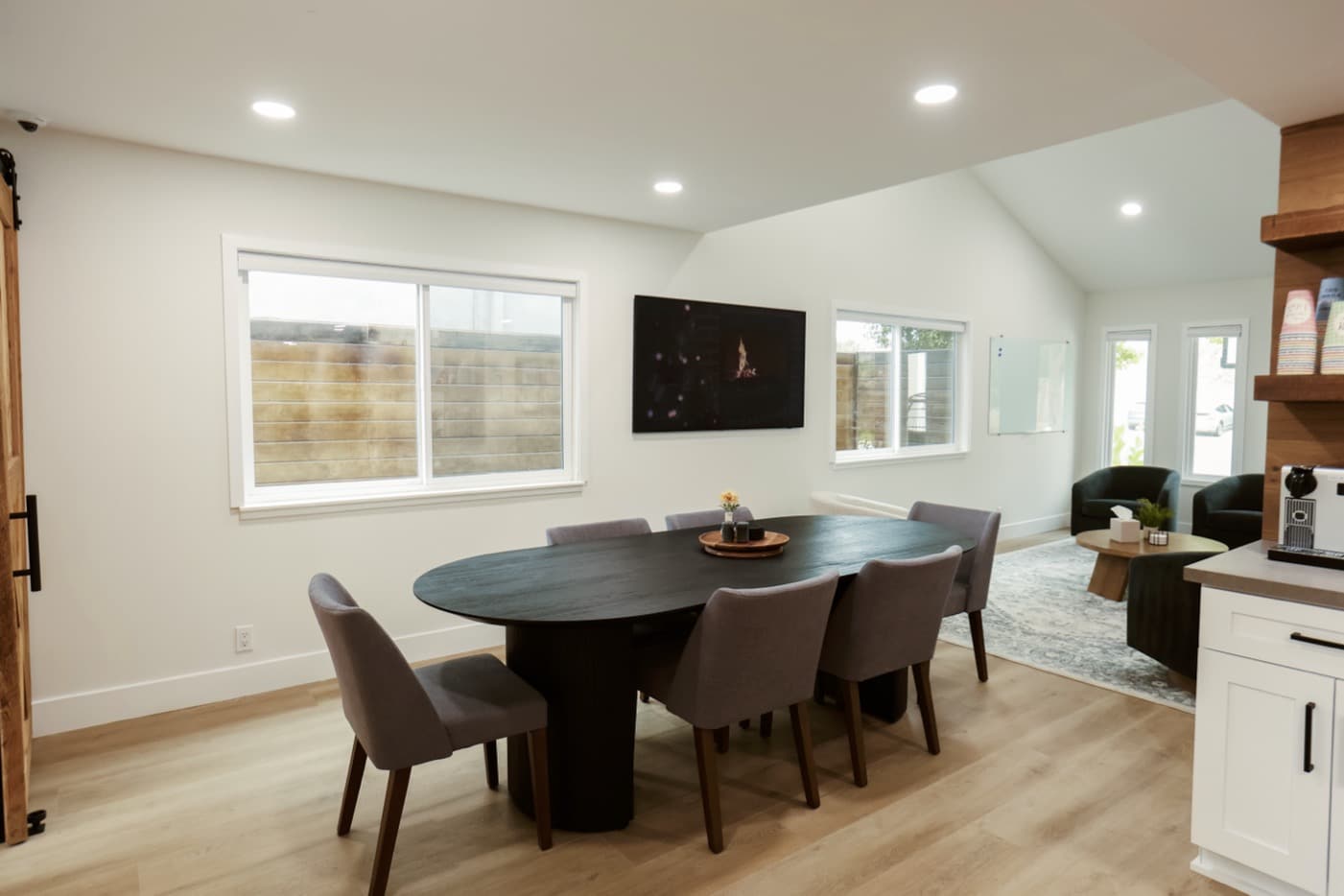
Residential treatment programs occupy the middle ground. People live on site, attend structured programming most of the day, and have staff available around the clock, but the setting is unlocked and closer to a home than a hospital. Stays of one to six months are common, and the goal is to rebuild routines – sleep, medication, meals, work or school – in a place where a bad week does not undo everything.
Inpatient Mental Health Units and Hospital-Based Services
Inpatient mental health units are for people who need 24-hour medical and nursing supervision. In Texas, that includes private psychiatric hospitals licensed by the state and the public system described by Texas Health and Human Services, which operates ten state hospitals and one residential youth center. State hospitals serve people with the most severe illness, including many referred through the courts, and they can hold patients for extended periods when shorter stays have not worked.
Psychiatric Care Standards Across Texas Facilities
Psychiatric care in Texas is regulated at two levels. Private psychiatric hospitals and crisis stabilization units are licensed and inspected by HHSC under state law, with rules covering staffing, restraint and seclusion, patient rights, and treatment planning. State hospitals operate under the same commission and are additionally accredited through national bodies.
What the rules do not guarantee is quality of the day-to-day experience. Two licensed facilities can differ enormously in how much individual therapy a patient receives, how quickly a psychiatrist adjusts a failing medication, and whether the discharge plan is written with the patient or handed to them at the door. Those are the questions to ask on a tour of any of the long term mental health facilities in Texas you are considering.
Chronic Mental Illness Management in Residential Settings
Chronic mental illness – schizophrenia, schizoaffective disorder, bipolar I, severe recurrent depression – rarely resolves with a single stay. The point of a residential setting is to hold someone steady long enough for medication to work and for skills to take root, then transfer that stability to a less restrictive environment without dropping it.

Medication Management and Clinical Oversight
Medication is where residential settings earn their cost. The National Institute of Mental Health notes that clozapine, the antipsychotic used when others fail, requires regular blood tests for a potentially dangerous drop in white cells, and that lithium needs ongoing monitoring of blood levels along with kidney and thyroid function. Those schedules are easy to keep in a facility and easy to miss at home. Oversight in a good program includes:
- A psychiatrist who sees the patient at least weekly, not monthly
- Lab monitoring built into the calendar, with results reviewed rather than filed
- Side-effect tracking, since weight gain, sedation, and tremor are why people quit their medications
- Long-acting injectable options for people who struggle with daily pills
- A written plan for who prescribes after discharge
Behavioral Health Facilities and Their Treatment Approaches
Behavioral health facilities vary in philosophy as much as in structure. Some are built around a psychiatric model, with medication at the center and therapy in support. Others lead with psychosocial rehabilitation and treat medication as one tool. Neither is wrong; the mismatch between what a person needs and what a facility believes in is what produces bad outcomes.
Therapeutic Services Tailored to Individual Needs
Therapeutic services worth looking for include individual psychotherapy with a consistent clinician, family sessions that prepare the household for discharge, occupational therapy for daily-living skills, and vocational or educational support. Group therapy is standard everywhere; what distinguishes a strong program is how much one-on-one time sits alongside it.
Evidence-Based Interventions for Long-Term Recovery
The interventions with the best track record for serious mental illness are well established:
- Cognitive behavioral therapy adapted for psychosis and for mood disorders
- Dialectical behavior therapy for emotion regulation and self-harm
- Illness management and recovery programs that teach relapse recognition
- Family psychoeducation, which cuts relapse rates substantially
- Supported employment, which predicts long-term stability better than most clinical measures
A facility that names these specifically is speaking the same language as the research. One that offers therapy without specifying what kind is worth pressing.
Mental Health Treatment Options for Extended Care
Mental health treatment for the long haul almost always means a sequence rather than a single placement. A typical path might run from a hospital unit to a residential program to partial hospitalization and then outpatient care with supported housing. Each step should be planned before the previous one ends.
For Texans without private insurance, the path into public inpatient care runs through the local mental health authority, which HHS designates to screen for admission and determine the least restrictive appropriate setting. That screening can feel like an obstacle, but it also connects people to community services they did not know existed. Among long term mental health facilities in Texas, the best public and private options increasingly work together rather than in parallel.
Choosing the Right Facility for Your Recovery Journey at Lonestar Mental Health
Sustained mental health recovery depends on choosing a level of care that matches where you actually are, not where a brochure says you should be. At Lonestar Mental Health, clinicians assess what setting fits, provide psychiatric care and evidence-based therapy, and coordinate the step-down so nobody is discharged into a void. Contact Lonestar Mental Health to talk through the options for yourself or a family member. If someone is in immediate danger, call 911 or go to the nearest emergency room; in a mental health crisis, call or text 988.

FAQs
-
How long do most patients stay in Texas residential treatment programs for mental health?
Stays commonly run from 30 to 90 days, with some programs extending to six months or longer for people with chronic illness. Length is usually set by clinical progress and insurance authorization rather than a fixed calendar. State hospital admissions can last considerably longer when courts or repeated relapses are involved.
-
What psychiatric medications are commonly managed in long-term inpatient mental health facilities?
Antipsychotics, including long-acting injectables and clozapine, are the most common, followed by mood stabilizers such as lithium and anticonvulsants, and antidepressants. Many of these require scheduled blood work, which is a core reason for the supervised setting. Sleep and anxiety medications are typically used sparingly and short-term.
-
Can behavioral health facilities treat multiple chronic mental illnesses simultaneously in one setting?
Yes, and the good ones expect to. Co-occurring conditions such as bipolar disorder with a substance use disorder, or schizophrenia with PTSD, are the norm rather than the exception. Ask whether the facility treats both within the same team or refers one condition elsewhere, since handoffs are where people get lost.
-
Which evidence-based therapeutic services work best for extended mental health recovery periods?
For serious mental illness, family psychoeducation, illness management skills, cognitive behavioral approaches, and supported employment have the strongest evidence for reducing relapse. Individual therapy with a consistent clinician matters more than the number of groups attended. The combination of medication adherence and structured daily routine underlies all of it.
-
How do Texas hospital-based psychiatric units differ from standalone residential treatment centers?
Hospital units are locked, staffed by nurses and physicians around the clock, and designed for acute risk and medical complexity. Residential centers are unlocked, home-like, and focused on rehabilitation and skill-building for people who are past the acute phase. Hospitals also carry stricter licensing and, in the public system, admission through the local mental health authority.
References
- Texas Health and Human Services. (2026). State hospitals. https://www.hhs.texas.gov/services/mental-health-substance-use/state-hospitals
- National Institute of Mental Health. (2025). Mental health medications. National Institutes of Health. https://www.nimh.nih.gov/health/topics/mental-health-medications